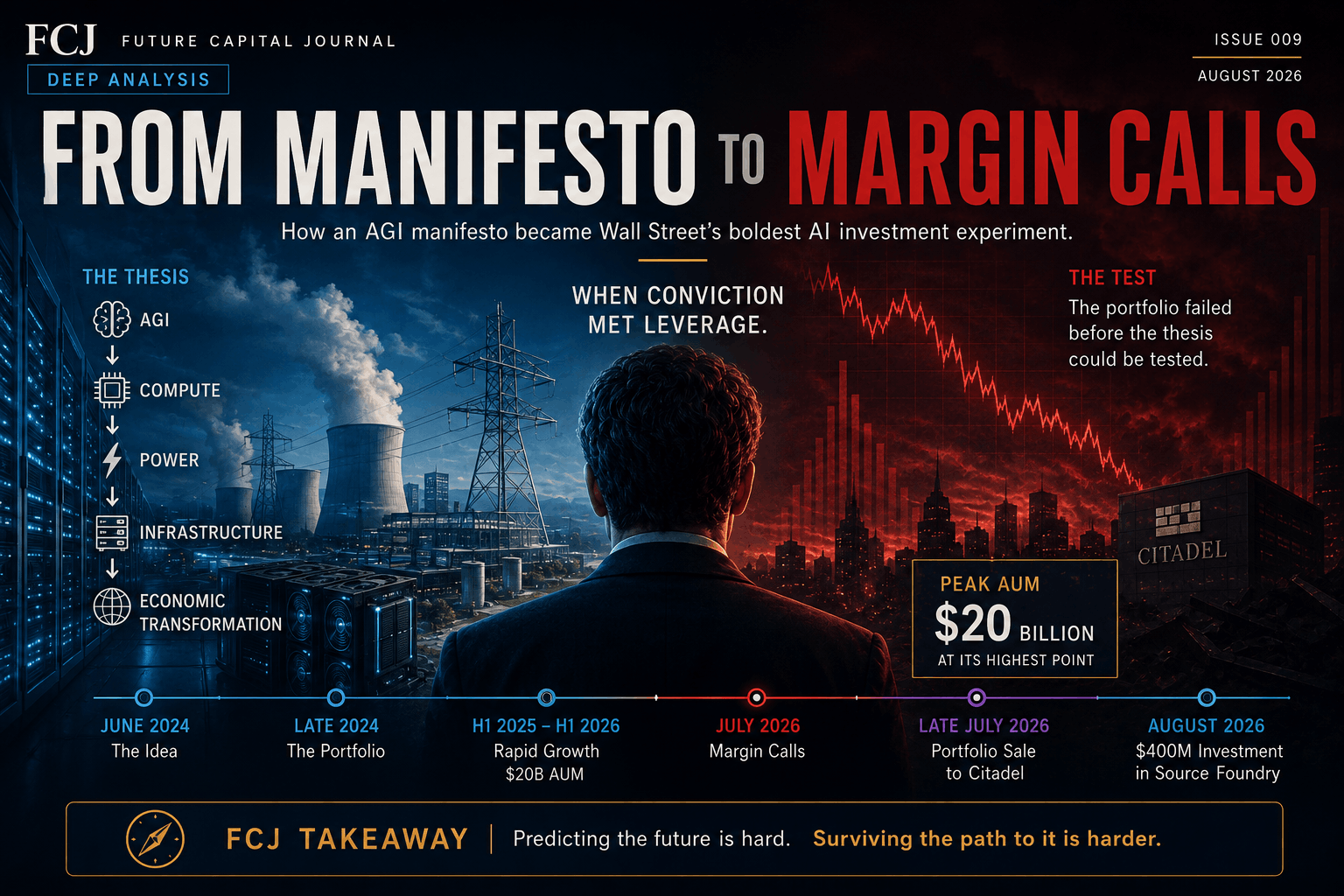
The AI Thesis Survived. The Portfolio Didn’t. Why Situational Awareness Failed Without Abandoning Its Bet on AGI
For nearly two years, Leopold Aschenbrenner’s Situational Awareness became one of the most closely watched investment firms in artificial intelligence. Launched in 2024 with a few hundred million dollars, the hedge fund rapidly expanded into a multi-billion-dollar investment vehicle by making concentrated bets on what its founder believed would become the defining economic transformation of the century: the arrival of artificial general intelligence (AGI). Unlike many technology-focused funds that concentrated on familiar names such as Nvidia or Broadcom, Situational Awareness invested in a different part of the AI ecosystem—the companies building the physical infrastructure required to support increasingly powerful AI systems, including electricity generation, data centers, cloud infrastructure, optical networking, and advanced memory technologies.
The strategy appeared remarkably successful. As enthusiasm for artificial intelligence accelerated, the fund’s concentrated positions generated extraordinary returns and attracted billions of dollars from investors eager to participate in what many viewed as the next great technological revolution. More importantly, the fund offered something that few others did: a coherent investment philosophy. Every position in the portfolio traced back to a single idea—that rapid advances in AI would create unprecedented demand for the infrastructure needed to train and deploy increasingly capable models. Rather than treating AI as another technology trend, Situational Awareness treated it as the foundation of a new industrial era.
Then, within weeks, the narrative changed. A sharp sell-off in AI-related equities exposed the risks of the fund’s concentrated and leveraged positioning. As losses mounted and margin calls intensified, Situational Awareness sold much of its public equity portfolio to Citadel, marking one of the most dramatic reversals of any AI-focused investment firm in recent years. To many observers, the episode appeared to confirm that the AI investment boom had finally met reality.
Yet that conclusion overlooks the most important part of the story. Even after liquidating much of its public stock portfolio, Situational Awareness retained its private investments in companies such as Anthropic and continued committing fresh capital to deep-technology ventures, including semiconductor manufacturing startup Source Foundry. The fund’s portfolio changed dramatically, but its underlying conviction did not. Aschenbrenner continued to argue that the long-term opportunities created by AI remained intact, even as the market punished the way those opportunities had been financed.
The collapse of Situational Awareness therefore raises a more important question than whether AI stocks had become overvalued. It challenges investors to distinguish between a technological thesis and the way that thesis is implemented in a portfolio. Was the fund’s central prediction about AI fundamentally flawed, or did a combination of leverage, concentration, and market volatility destroy a strategy that may yet prove directionally correct? The answer offers lessons that extend far beyond one hedge fund—and may shape how investors approach the next phase of the AI economy.
An Essay That Became an Investment Strategy
Most hedge funds are built around years of investing experience, evolving market strategies, or proprietary trading models. Situational Awareness was different. Before there was a portfolio, there was an essay.
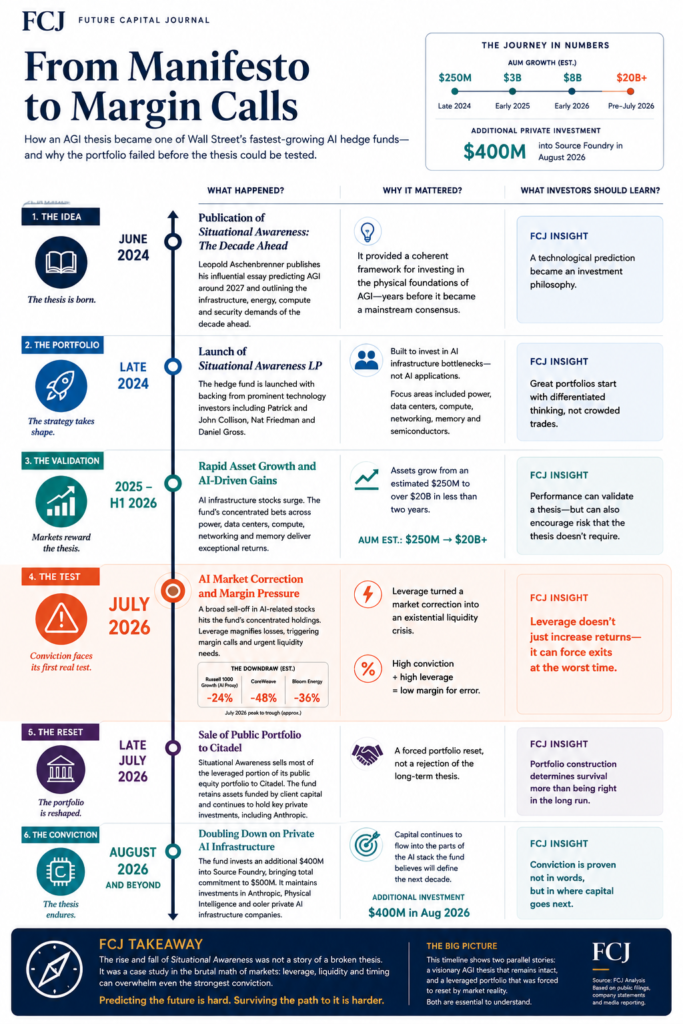
In June 2024, former OpenAI researcher Leopold Aschenbrenner published Situational Awareness: The Decade Ahead, outlining a bold prediction about the trajectory of artificial intelligence. The essay argued that if the pace of AI progress continued, the world could move from today’s large language models to artificial general intelligence (AGI) as early as 2027, with superintelligent systems emerging not long after. In Aschenbrenner’s view, AI would become a defining driver of economic growth, military capability, and geopolitical influence, making investments in compute infrastructure, energy, AI security, and national preparedness increasingly critical.
Unlike many technology forecasts that remain academic exercises, Situational Awareness became the blueprint for an investment strategy. When Aschenbrenner launched his hedge fund in 2024, he translated the essay’s central ideas directly into a portfolio. Rather than chasing the most recognizable AI companies, the fund focused on what it viewed as the physical foundations of the AI economy. If increasingly capable AI systems required vast amounts of computing power, then electricity generation, data centres, cloud infrastructure, optical networking, memory technologies, and semiconductor manufacturing would become the essential infrastructure supporting that transformation.
This approach reflected a broader belief that the greatest beneficiaries of the AI revolution might not be the companies building frontier models, but those supplying the resources needed to train and operate them at scale. In that sense, Situational Awareness was never simply a hedge fund investing in AI stocks. It was a portfolio constructed around a single macroeconomic conviction: that the race toward AGI would reshape industries, infrastructure, and national priorities long before the technology itself reached maturity. Every major investment flowed from that premise, making the fund one of the clearest examples of an investment strategy built directly from a technological thesis rather than traditional market analysis.
Investing in AI’s Physical Backbone
If Situational Awareness: The Decade Ahead provided the intellectual framework, the portfolio became its practical expression. Rather than concentrating on the most visible beneficiaries of the AI boom, such as Nvidia, Situational Awareness focused on what Aschenbrenner believed were the less appreciated but equally critical layers of the AI ecosystem. The fund’s premise was straightforward: if increasingly capable AI systems required exponentially more computing power, the greatest opportunities might lie not only in the companies designing AI models or chips, but in those enabling the infrastructure that made large-scale AI possible.
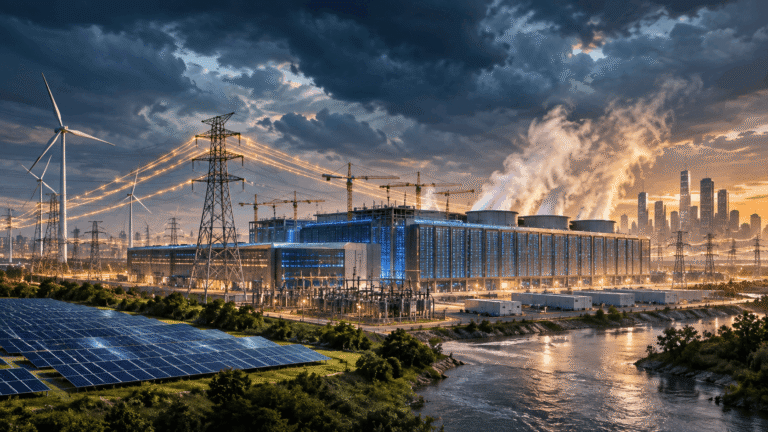
That conviction shaped every major investment. The fund built significant positions in companies tied to electricity generation and energy infrastructure, arguing that reliable power would become one of the biggest constraints on AI expansion. It also invested heavily in operators and developers of AI data centres and cloud computing platforms, reflecting the expectation that training and deploying advanced AI models would require unprecedented amounts of computing capacity. Optical networking companies were another key focus, as high-speed data transfer would be essential for connecting increasingly large AI clusters. The portfolio also included substantial exposure to memory and storage technologies, based on the view that AI workloads would drive sustained demand for high-performance memory solutions.
The fund’s largest holdings illustrated this philosophy. Bloom Energy became its biggest position because of its fuel-cell technology for on-site electricity generation, while Lumentum offered exposure to optical networking equipment. CoreWeave represented AI cloud infrastructure, Core Scientific and Applied Digital reflected the conversion of power-rich cryptocurrency mining assets into AI data centres, and SanDisk provided access to the growing demand for AI memory and storage. Together, these investments formed a portfolio built around the physical bottlenecks of AI rather than the technology’s most recognisable brands.
By investing across power, compute, networking, and memory, Situational Awareness was effectively making a broader wager: that the companies supplying the essential infrastructure for AI would capture a significant share of the economic value created by the transition to increasingly capable intelligent systems. The portfolio was therefore less a collection of individual stock picks than a coordinated investment in what Aschenbrenner viewed as the industrial backbone of the AI era.
Why Investors Fell in Love
Situational Awareness did not attract billions of dollars simply because it delivered exceptional returns. It attracted capital because its performance appeared to validate a coherent and highly differentiated investment thesis. As AI-related stocks rallied through the first half of 2026, the fund reported extraordinary gains, with net returns reaching 439% by the end of June. Assets under management expanded at a remarkable pace, growing from a few hundred million dollars at launch to more than $20 billion within two years, making Situational Awareness one of the fastest-growing hedge funds on Wall Street.
Performance alone, however, does not explain the enthusiasm surrounding the fund. Situational Awareness also attracted an influential group of early backers, including Stripe co-founders Patrick and John Collison, former GitHub CEO Nat Friedman, entrepreneur Daniel Gross, and later institutional investors such as Jane Street. Their support gave credibility to a first-time hedge fund manager with no prior professional investing experience and reinforced the perception that Aschenbrenner’s ideas deserved serious attention.
More importantly, investors were buying into a narrative that extended beyond quarterly returns. Aschenbrenner argued that artificial intelligence would reshape the global economy through massive investment in power generation, semiconductor manufacturing, cloud infrastructure, and AI compute. The portfolio reflected that belief with unusual consistency. Each investment was intended to capture a different bottleneck in the AI value chain, giving investors exposure not merely to individual companies but to a long-term structural transformation. In an industry where many technology funds simply accumulated the market’s largest AI winners, Situational Awareness offered something different: a portfolio built around a single macroeconomic thesis.
That clarity became one of the fund’s greatest strengths. Regulatory filings were closely scrutinised by investors looking for clues about the next phase of the AI build-out, while Aschenbrenner himself acquired a reputation as one of the most closely watched voices in AI investing. By mid-2026, Situational Awareness had become more than a successful hedge fund. It had become a proxy for investor confidence in the economic future of artificial intelligence.
When Conviction Met Leverage
The turning point for Situational Awareness did not begin with a change in its view of artificial intelligence. It began with a change in market sentiment. After a powerful rally in AI-related equities during the first half of 2026, investors grew increasingly concerned about elevated valuations, rising borrowing costs, and the scale of capital expenditure required to sustain the AI build-out. The resulting sell-off extended across much of the AI ecosystem, hitting many of the companies that had formed the core of Situational Awareness’s portfolio. Shares of memory manufacturers, AI cloud providers, energy companies, and other infrastructure plays declined sharply as investors reassessed both growth expectations and risk.
For most investment funds, a market correction would have meant absorbing losses and waiting for sentiment to recover. Situational Awareness, however, had amplified its exposure through borrowed capital. Leverage had accelerated gains during the rally, but it also magnified losses as prices fell. As portfolio values declined, lenders demanded additional collateral through margin calls, forcing the fund to raise cash at precisely the moment when markets were under pressure. What had once been a powerful tool for enhancing returns became a source of financial strain.
The pressure ultimately culminated in one of the most dramatic episodes of the AI investment cycle. Situational Awareness sold the bulk of the leveraged portion of its public equity portfolio to Citadel, while retaining investments financed by client capital and continuing to hold its private assets, including Anthropic. The transaction underscored an important distinction: the fund was not liquidating because it had abandoned its long-term belief in AI. It was responding to the immediate demands of a highly leveraged portfolio operating in rapidly deteriorating market conditions.
The episode illustrated a fundamental principle of investing. A compelling long-term thesis does not eliminate short-term financial constraints. In rising markets, leverage can make conviction appear visionary. In falling markets, that same leverage can force investors to exit positions long before their underlying thesis has an opportunity to play out.
The Thesis Didn’t Change
To many investors, the forced sale of Situational Awareness’s public equity portfolio appeared to mark the collapse of one of Wall Street’s boldest bets on artificial intelligence. Yet focusing solely on the liquidation risks overlooking the most revealing aspect of the episode. While the fund dramatically reduced its exposure to publicly traded AI infrastructure companies, it did not abandon the investment thesis that had defined it from the beginning. If anything, its actions after the sell-off suggested that Aschenbrenner remained as convinced as ever that AI would reshape the global economy over the coming decade.
The distinction is important because public equities and private investments serve different purposes within a portfolio. To meet margin calls and reduce leverage, Situational Awareness sold much of its publicly traded stock portfolio. However, it retained several of its highest-conviction private investments, including a multibillion-dollar stake in Anthropic and positions in robotics startup Physical Intelligence. Those holdings represented long-term bets on frontier AI development rather than short-term market trades, reinforcing the view that the fund’s core beliefs had survived even as its public portfolio was being reshaped.
Perhaps the clearest evidence came only weeks after the market turmoil. Rather than retreating from AI, Situational Awareness committed an additional $400 million to Source Foundry, bringing its total investment in the semiconductor manufacturing startup to $500 million. The company aims to develop next-generation chip manufacturing equipment capable of challenging the dominance of established suppliers, addressing what Aschenbrenner views as one of the most significant long-term bottlenecks in AI: the ability to manufacture increasingly advanced semiconductors at scale.
Taken together, these decisions suggest that the crisis was not a rejection of the fund’s original thesis but a reconfiguration of how that thesis would be expressed. Public market positions proved vulnerable to leverage and short-term volatility. Private investments, by contrast, allowed the fund to continue backing the infrastructure and technologies it believed would underpin the next phase of AI development. The episode therefore challenges a common assumption: a portfolio can be forced to change even when the underlying conviction remains intact. In the case of Situational Awareness, the market dismantled the financing strategy—but it did not dismantle the belief that artificial intelligence would remain one of the defining investment themes of the coming decade.
A Good Thesis Can Still Produce Bad Returns
The rapid rise and equally dramatic reversal of Situational Awareness prompted widespread debate over whether the fund’s collapse invalidated its underlying investment thesis. Among the most thoughtful responses came from valuation expert Aswath Damodaran, who argued that the episode should be viewed less as a failure of the AI narrative and more as a lesson in portfolio construction. In his assessment, the fund demonstrated how a compelling long-term idea can still produce disappointing investment outcomes when combined with excessive leverage, concentrated positions, and the unpredictability of financial markets.
Damodaran identified three lessons. The first was the danger of combining strong conviction with heavy leverage. Borrowed capital amplified the fund’s exceptional gains during the AI rally, but it also accelerated losses once market sentiment reversed. As falling asset prices triggered margin calls, the portfolio was forced into selling positions before its long-term thesis could be tested.
His second lesson centred on market momentum. Situational Awareness benefited from a period in which enthusiasm for AI infrastructure lifted many of its holdings simultaneously. However, momentum is inherently cyclical. When investors reassessed valuations and risk, the same forces that had magnified returns quickly amplified losses, demonstrating that market sentiment can overwhelm even well-researched investment ideas in the short term.
Finally, Damodaran argued that successful investing requires humility. High-conviction ideas can create an illusion of certainty, encouraging investors to take increasingly concentrated positions or rely too heavily on borrowed money. His broader point was not that conviction is misplaced, but that uncertainty remains an unavoidable feature of investing, particularly in industries evolving as rapidly as artificial intelligence.
The events surrounding Situational Awareness appear to reinforce that distinction. Nothing in the fund’s subsequent actions suggests that Aschenbrenner abandoned his belief in the long-term importance of AI infrastructure. Instead, the crisis exposed the risks of implementing that belief through a highly leveraged and concentrated portfolio. The investment thesis and the investment strategy were never the same thing. One represented a long-term view of how AI could reshape the global economy; the other reflected a set of portfolio decisions that proved vulnerable to short-term market volatility. The failure, therefore, lay less in the AI thesis itself than in the way that thesis was financed and expressed in public markets.
What Investors Should Learn
The story of Situational Awareness extends beyond the rise and fall of a single hedge fund. It illustrates the challenges of investing in transformative technologies, where long-term conviction often collides with the short-term realities of financial markets. While the fund’s experience was shaped by its own investment decisions, it offers broader lessons for investors seeking to position themselves for structural shifts such as artificial intelligence.
First, technological conviction should never be confused with portfolio resilience. A well-researched view of the future does not automatically translate into a successful investment strategy. Aschenbrenner’s belief that AI infrastructure would become increasingly valuable shaped a portfolio that was internally consistent and intellectually coherent. Yet the implementation of that thesis—through concentrated positions and significant leverage—left little room to absorb unexpected market volatility. Even the strongest ideas require portfolio structures capable of surviving periods when markets move against them.
Second, being directionally right does not guarantee favourable investment outcomes. Markets rarely move in a straight line, particularly during periods of technological transformation. AI infrastructure may continue to benefit from growing demand over the coming decade, but short-term corrections, changing interest rates, and shifts in investor sentiment can produce severe drawdowns long before a long-term thesis is fully realised. Investors therefore need both conviction and patience, recognising that the timing of market returns rarely matches the timing of technological progress.
Finally, liquidity can matter as much as being right. Situational Awareness was not forced to reduce its public equity exposure because it publicly abandoned its AI thesis. It sold assets because leverage and margin calls limited its ability to wait for markets to recover. The episode serves as a reminder that successful investing is not simply about identifying the next transformative technology. It is equally about ensuring that a portfolio has sufficient financial flexibility to remain invested until that transformation unfolds. In investing, survival is often the prerequisite for success.
For long-term investors, these lessons may prove more enduring than the fund’s spectacular gains or painful losses. Technologies evolve, markets cycle, and investment themes change. But the principles of disciplined portfolio construction, prudent risk management, and maintaining the liquidity to withstand volatility remain constant—regardless of whether the next great opportunity is artificial intelligence or something yet to emerge.
When Being Right Isn’t Enough
Perhaps the most difficult question raised by the rise and fall of Situational Awareness cannot be answered today. It is entirely possible that Aschenbrenner’s long-term vision of artificial intelligence ultimately proves substantially correct. The rapid expansion of AI infrastructure, growing investment in data centres, continued advances in semiconductor technology, and increasing demand for computing power all suggest that the forces identified in Situational Awareness: The Decade Ahead remain influential, even if the timeline and pace of development remain uncertain. The fund itself continued to invest in companies positioned to benefit from those trends, indicating that its long-term conviction remained intact despite the turmoil in public markets.
History offers numerous examples of investors who correctly identified transformational technologies but struggled to profit from them because markets moved on a different timetable. Financial markets are shaped not only by innovation but also by interest rates, liquidity, investor sentiment, and risk appetite. A sound technological thesis may take years to unfold, while portfolios are evaluated—and often forced to react—in real time. The experience of Situational Awareness illustrates how that disconnect can become particularly severe when conviction is combined with leverage and concentrated positions.
Whether AGI emerges within Aschenbrenner’s projected timeframe is ultimately a question that only future technological progress can answer. Likewise, the long-term demand for AI infrastructure will depend on how rapidly artificial intelligence continues to evolve and how broadly it is adopted across industries. The available evidence does not yet resolve either question. What the Situational Awareness episode does demonstrate, however, is that being directionally right about the future does not guarantee investment success. Markets can impose constraints that have little to do with the validity of an underlying thesis and everything to do with how that thesis is financed and managed.
In that sense, the lasting significance of Situational Awareness may lie less in whether its prediction about AGI proves accurate and more in what it reveals about investing in periods of technological transformation. Identifying the future is only one part of the challenge. Equally important is constructing a portfolio that can withstand uncertainty long enough to benefit if that future eventually arrives.
Conclusion
The story of Situational Awareness is unlikely to be remembered simply because a hedge fund rose rapidly and then stumbled. Financial markets have witnessed spectacular booms and painful reversals before, and they will again. What makes this episode different is that it represented one of the first serious attempts to build an investment portfolio around a coherent vision of artificial general intelligence. Rather than treating AI as another technology cycle, the fund sought to invest in the physical infrastructure that its founder believed would underpin the next era of economic and industrial transformation.
Whether that vision ultimately proves correct remains an open question. Artificial intelligence continues to evolve rapidly, investment in AI infrastructure remains substantial, and many of the structural themes identified by Aschenbrenner—including growing demand for computing power, energy, and advanced semiconductor manufacturing—have not disappeared simply because markets became more volatile. At the same time, the events surrounding Situational Awareness demonstrate that even the most compelling long-term thesis can falter when portfolio construction, leverage, and liquidity are unable to withstand changing market conditions.
Perhaps the lasting lesson is that technological forecasting and successful investing are related but fundamentally different disciplines. One asks what the future might look like; the other asks whether investors can remain positioned long enough to benefit if that future arrives. The gap between those two questions is where risk management, capital structure, and market psychology become as important as technological insight.
Situational Awareness may therefore be remembered not as the hedge fund that proved the AI boom was a bubble, but as one of the first investment firms to translate an AGI worldview into a portfolio—and to discover that surviving the journey to the future can be just as important as predicting it. For investors navigating the next phase of the AI revolution, that distinction may prove to be its most enduring legacy.